

Scroll down for the English version
HYROX 的最後一站是 100 顆牆球。到了那個時候,你已經跑完 8 公里,推過、拉過雪橇,扛著沙袋弓步走完 100 公尺,雙腿基本上不是你的了。而你還要蹲下站起來一百次。
在所有站點裡,牆球平均花最多時間,快慢差距也最大。而且掉的時間通常不是因為體能不夠,是因為前面幾顆做得太快、太用力,或者根本沒被算到。
先搞清楚裁判在看什麼
牆球這一站的規則很單純,但每一條都會被盯:
- 蹲的深度:髖部必須低於膝蓋(低於水平線)。差一點點,就是無效。
- 球必須打中你那一組的目標區:男子目標高度 3.00 公尺,女子 2.70 公尺。打在目標區下方不算。
- 接住球直接進下一顆,或讓球落地後從站直重新開始;等球彈起來再接是無效。
重量方面,Open 組男子 6 公斤、女子 4 公斤;Pro 組男子 9 公斤、女子 6 公斤。不論哪一組,都是 100 顆。
本文的重量、高度與動作標準依 HYROX 2026/27 賽季規則書撰寫;HYROX 每季都可能調整規則,比賽前請以官方最新版本為準。
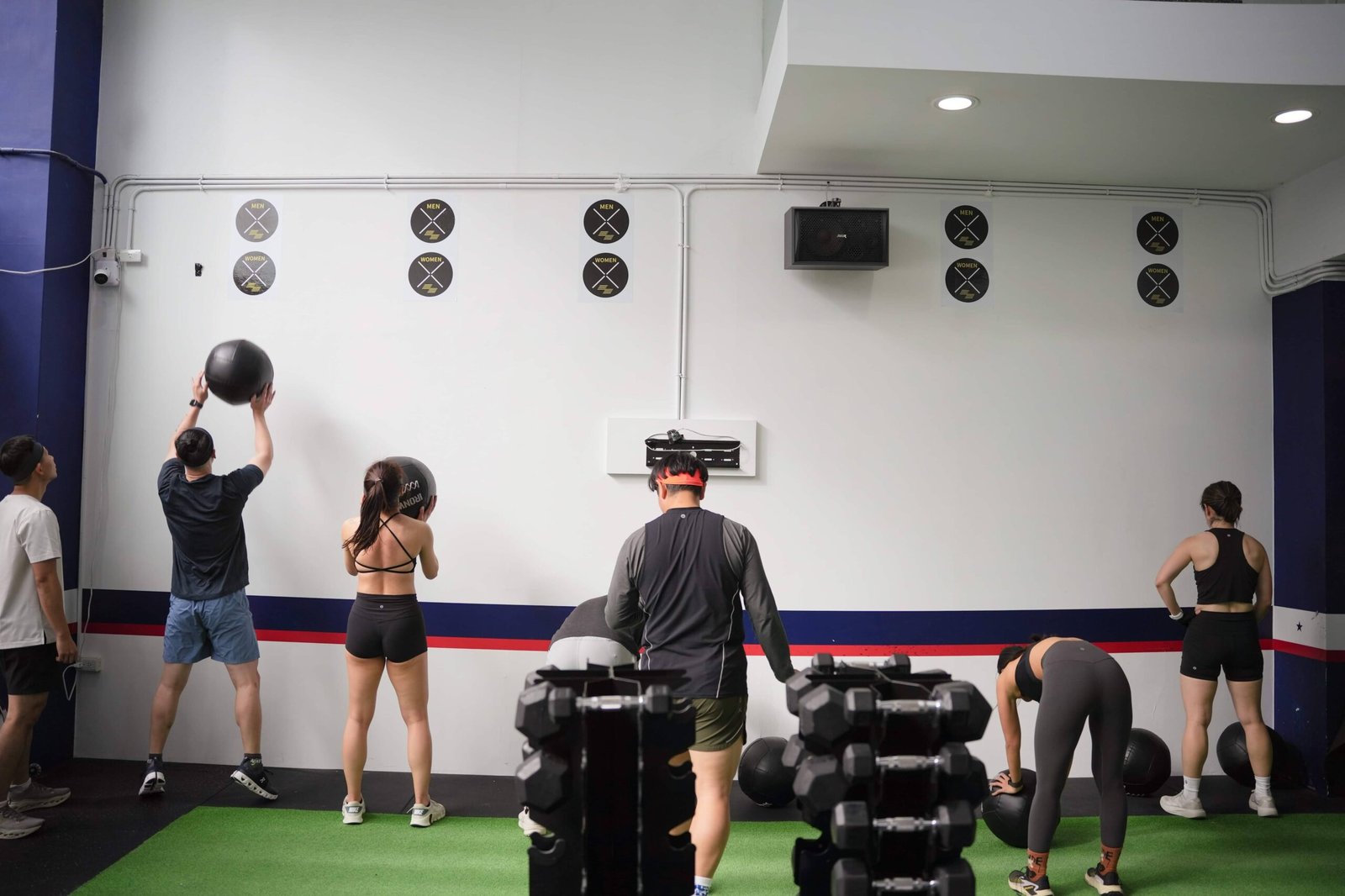
沒算到的那幾顆,才是真正的成本
這是最多人忽略的地方。一顆無效球的代價不是零,是雙倍:你花了力氣做了一顆,然後還要再做一顆。當你已經很累的時候,被判無效五次,等於憑空多做十顆。
而人在疲勞的時候,最先消失的往往是蹲的深度。你自己會覺得有蹲到,裁判看到的是差了三公分。所以請把深度當成不能妥協的那一項,寧可慢一點,也不要做白工。
三個最常見的錯誤
1. 用手把球推上去
牆球主要是下肢動作,不是肩推。力量應該從腳掌推地開始,經過髖部,最後手只是把球送出去。如果你的肩膀在第三十顆就開始燒,代表你可能用錯地方了。
2. 一開始就想不間斷做完
前二十顆感覺很輕鬆,於是你決定一路做到底。第四十顆你停下來,然後就再也回不去了。斷在你想斷的地方,比斷在你撐不住的地方好太多。
3. 接球的時候硬撐
球掉下來的時候,讓它帶著你進入下一個蹲,而不是用手臂把它擋住再重新蹲。前者省力,後者每一顆都在浪費。
怎麼分組比較聰明
從第一顆就開始分組。一個常見的起點是 10 到 15 顆一組,中間休 5 到 10 秒,全程維持同樣的節奏。聽起來很保守,但實際跑完你會發現,穩定分組的人通常比「衝到爆掉再慢慢磨」的人快。
呼吸也一樣:把球丟出去的時候吐氣,蹲下去的時候吸氣。憋氣做牆球,你撐不了多久。先在課堂上試出自己撐得住的組數。
你在 F45 早就在練這個了
牆球不是一個需要特別去準備的陌生動作。深蹲、推舉、藥球訓練,這些在 F45 的課表裡經常出現。主要差別在於,比賽時你要在極度疲勞下,連續做一百次標準動作。
所以下次課堂上遇到牆球,試著把注意力放在深度和呼吸上,而不是速度。那才是比賽當天真正會幫到你的東西。

這篇文章談的是比賽技巧與訓練建議,不是醫療建議。如果你目前有傷、正在懷孕,或有任何健康狀況,請先諮詢醫師或物理治療師,再和教練討論怎麼調整動作。所有動作都可以退階,強度永遠是你自己的。
100 Wall Balls: The Last Station, and the One That Breaks People
The final station in HYROX is 100 wall balls. By the time you get there you have run 8 kilometres, pushed and pulled a sled, lunged 100 metres with a sandbag on your shoulders, and your legs are not really yours any more. And you still have to squat and stand up one hundred times.
Across hundreds of thousands of results, wall balls is the slowest station on average and the one with the biggest gap between fast and slow athletes. And usually it is not because they ran out of fitness. It is because the early reps were too fast, too arm driven, or simply never counted.
Know what the judge is actually watching
The rules for this station are simple, and every one of them is enforced:
- Squat depth: your hips have to go lower than your knees (below parallel). Slightly high is a no rep.
- The ball must strike the target zone for your division: 3.00m for men, 2.70m for women. Below the target does not count.
- Catch it and go straight into the next rep, or let it drop and restart from standing tall. Catching it off the bounce is a no rep.
On weight, Open is 6kg for men and 4kg for women. Pro is 9kg for men and 6kg for women. Every division does 100 reps.
Weights, heights and movement standards in this article follow the HYROX 2026/27 rulebook. HYROX can change the rules each season, so check the latest official version before you race.
The reps that do not count are the real cost
This is the part most people never account for. A no rep does not cost you nothing. It costs you double. You spent the energy on a rep, and now you have to do another one. Five no reps deep into the station is ten extra reps you did not plan for.
And when you fatigue, depth is usually the first thing to go. It will feel like you are hitting it. The judge is seeing you miss by three centimetres. So treat depth as the thing you never compromise. Slower is fine. Wasted is not.
The three most common mistakes
1. Pushing the ball up with your arms
A wall ball is mostly a lower body movement, not a shoulder press. The power starts with your feet driving into the floor, travels through the hips, and your arms just deliver the ball. If your shoulders are burning by rep thirty, you are probably using the wrong engine.
2. Trying to go unbroken from the start
The first twenty feel easy, so you decide to take the whole thing in one go. You stop at forty and never get the rhythm back. Breaking where you choose is far better than breaking where you fail.
3. Fighting the catch
When the ball comes down, let it carry you into the next squat instead of blocking it with your arms and then squatting again. One of those saves energy on every single rep. The other burns it.
How to break it up properly
Break from rep one. A common starting point is sets of 10 to 15, five to ten seconds of rest between them, same rhythm the whole way through. It sounds conservative. In practice, people who hold a steady pattern usually finish faster than people who sprint, blow up, and then grind.
Breathing follows the same logic. Exhale as you throw, inhale as you drop. Hold your breath and you will gas out early. Find your own set size in class first.
You are already training this at F45
Wall balls are not some exotic movement you need a special programme for. Squats, presses and medicine ball work show up in F45 sessions often. The main difference on race day is doing one hundred clean reps while completely fatigued.
So next time wall balls come up in class, put your attention on depth and breathing rather than speed. That is the part that actually shows up on race day.
This article covers race technique and training guidance, not medical advice. If you are carrying an injury, are pregnant, or have any health condition, speak with a doctor or physiotherapist first and then talk to a coach about how to adjust. Every movement can be scaled, and the intensity is always yours.
參考資料 / References
- HYROX Rulebook – Single, Season 26/27(牆球重量、目標高度、動作標準、無效判定) — HYROX GmbH — https://maintain.hyrox.com/rulebooks/HYROX_RulebookSingles_EN.pdf
- HYROX Releases 2026/27 Rulebook Clarifications and Competition Updates — Hybrid Fitness Media, 2026-06-24 — https://hybridfitnessmedia.com/2026/06/24/hyrox-competition-standards-2026-27-season/
- Average HYROX Station Times: How Long Should Each Workout Take?(395,452 筆成績分析) — HyroxDataLab — https://hyroxdatalab.com/articles/average-hyrox-station-times
- Exercise for the Prevention and Treatment of Hypertension – Implications and Application(訓練時的呼吸與憋氣風險) — American College of Sports Medicine (ACSM) — https://acsm.org/exercise-for-the-prevention-and-treatment-of-hypertension/
- ACSM Information On… Exercising Your Way to Lowering Your Blood Pressure — American College of Sports Medicine (ACSM) — https://www.acsm.org/wp-content/uploads/2025/02/Exercising-Your-Way-to-Lowering-Your-Blood-Pressure-handout.pdf